The Port Huron Project
A series of six public reenactments of New Left protest speeches from the 1960s and '70s, staged at the original sites and delivered by actors to audiences of invited guests and passers-by. Named for the 1962 Port Huron Statement. Produced in collaboration with Creative Time, LACE, and the Oakland Museum of California, with support from Creative Capital and Brown University. The project's most critically documented work; subject of a book and substantial art-historical literature.
Works
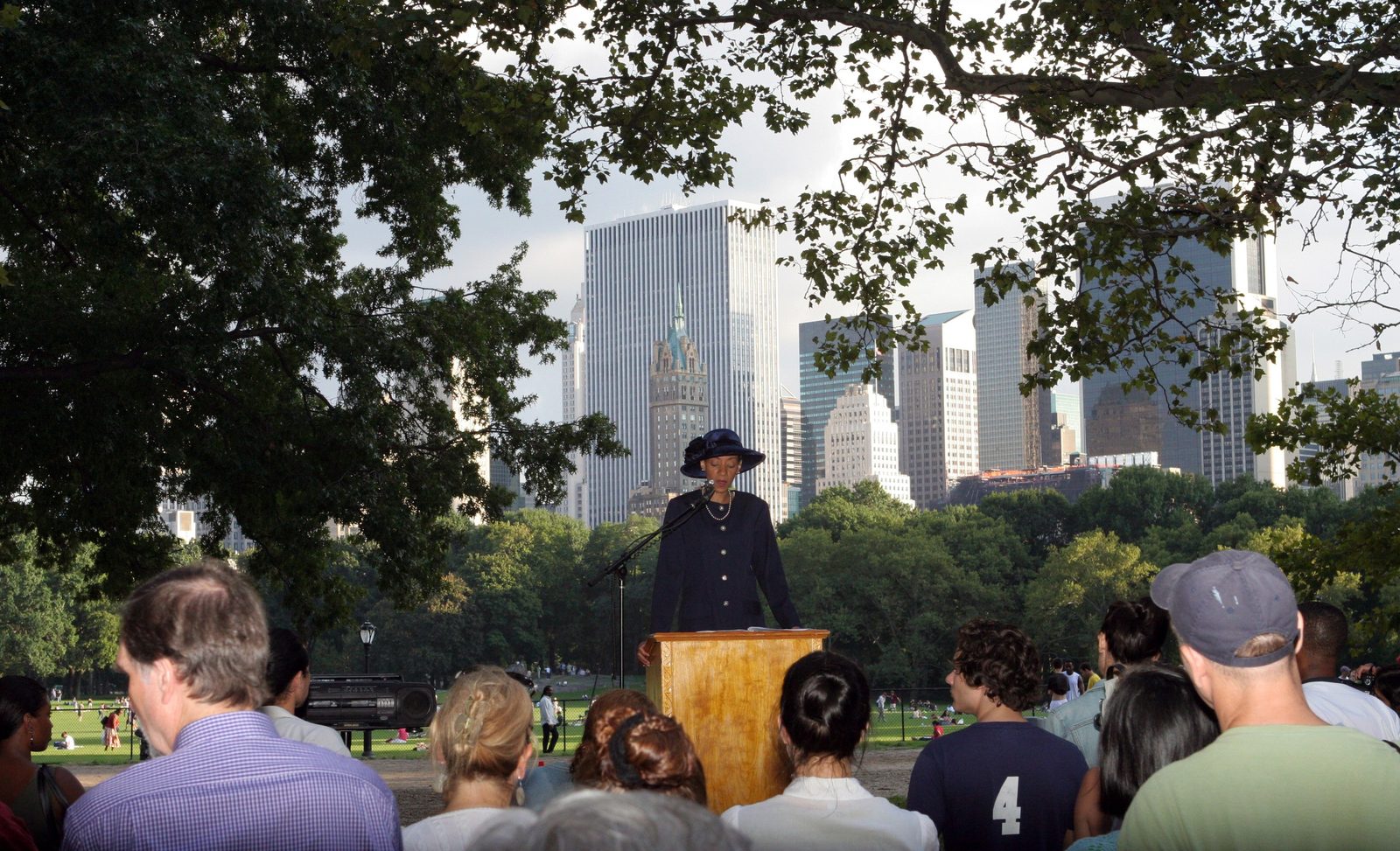
Until the Last Gun Is Silent, 2006
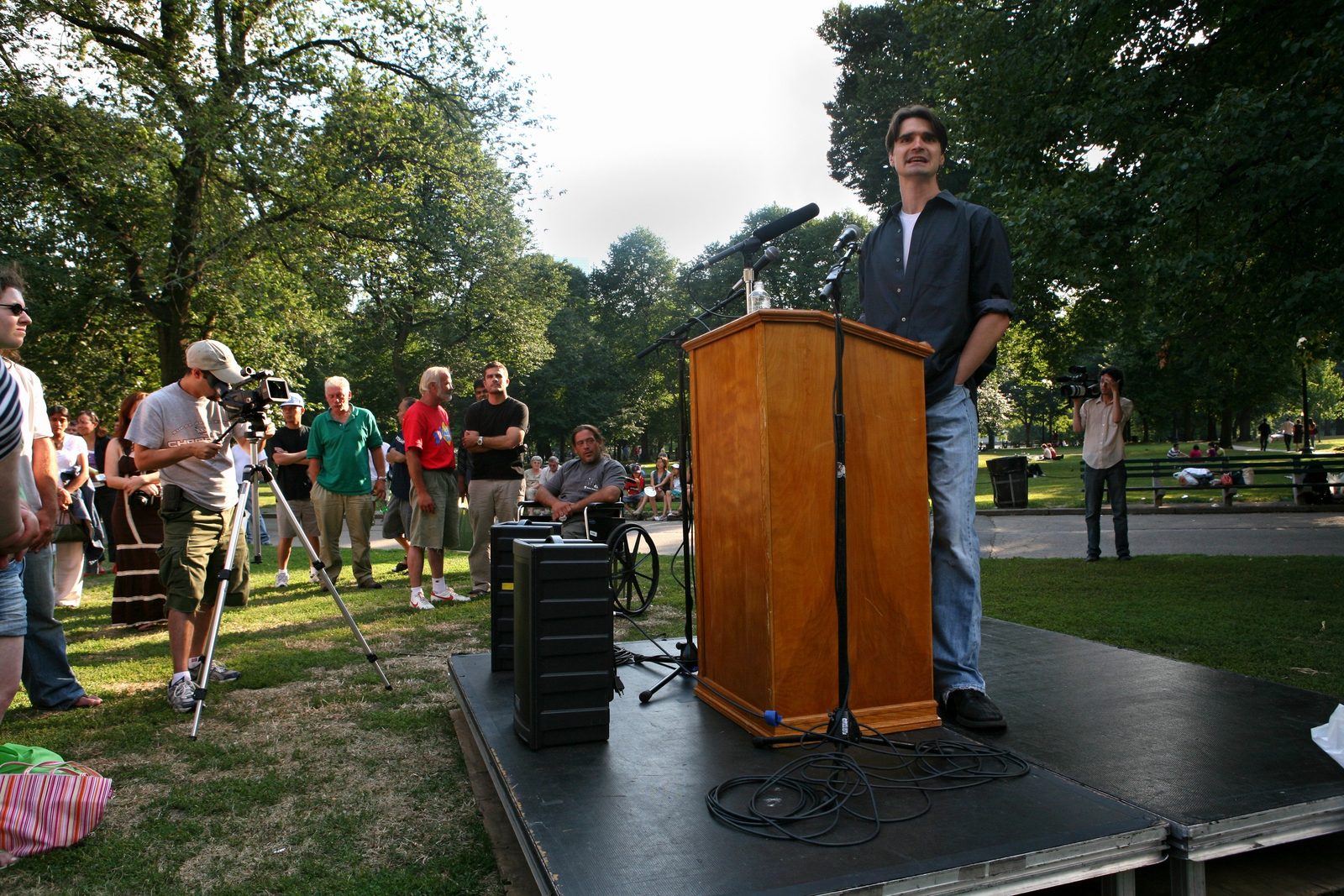
The Problem Is Civil Obedience, 2007
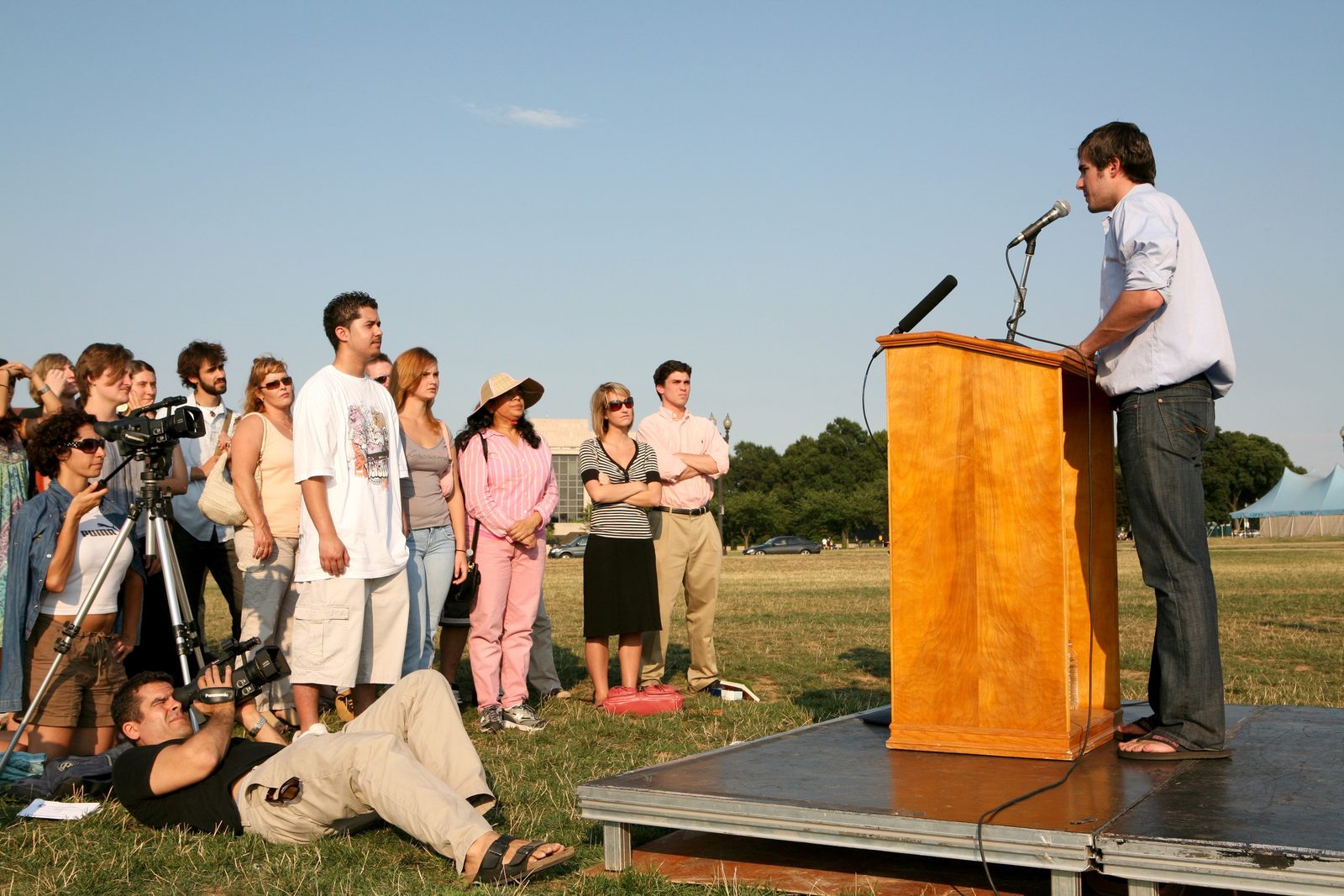
We Must Name the System, 2007
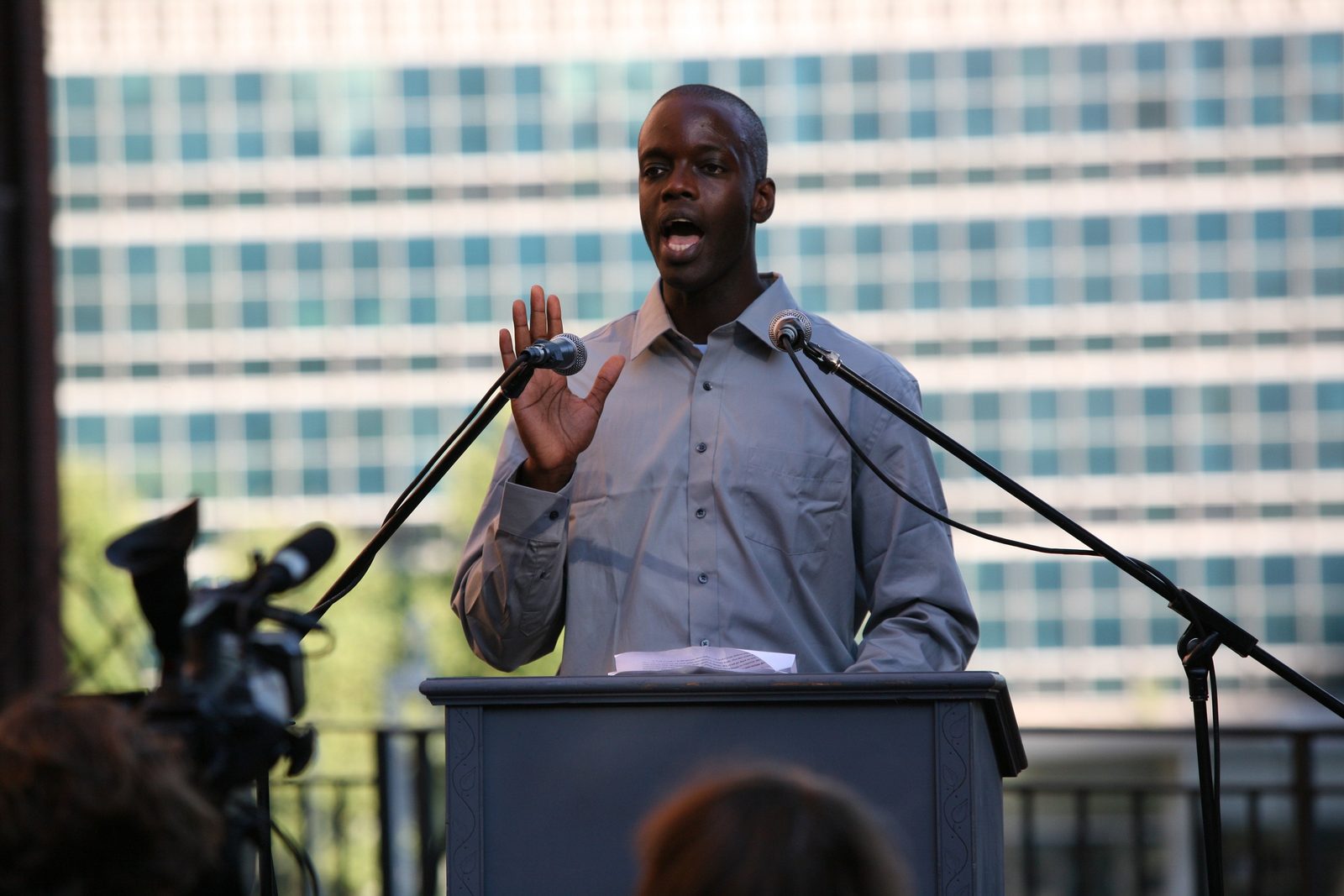
Let Another World Be Born, 2008
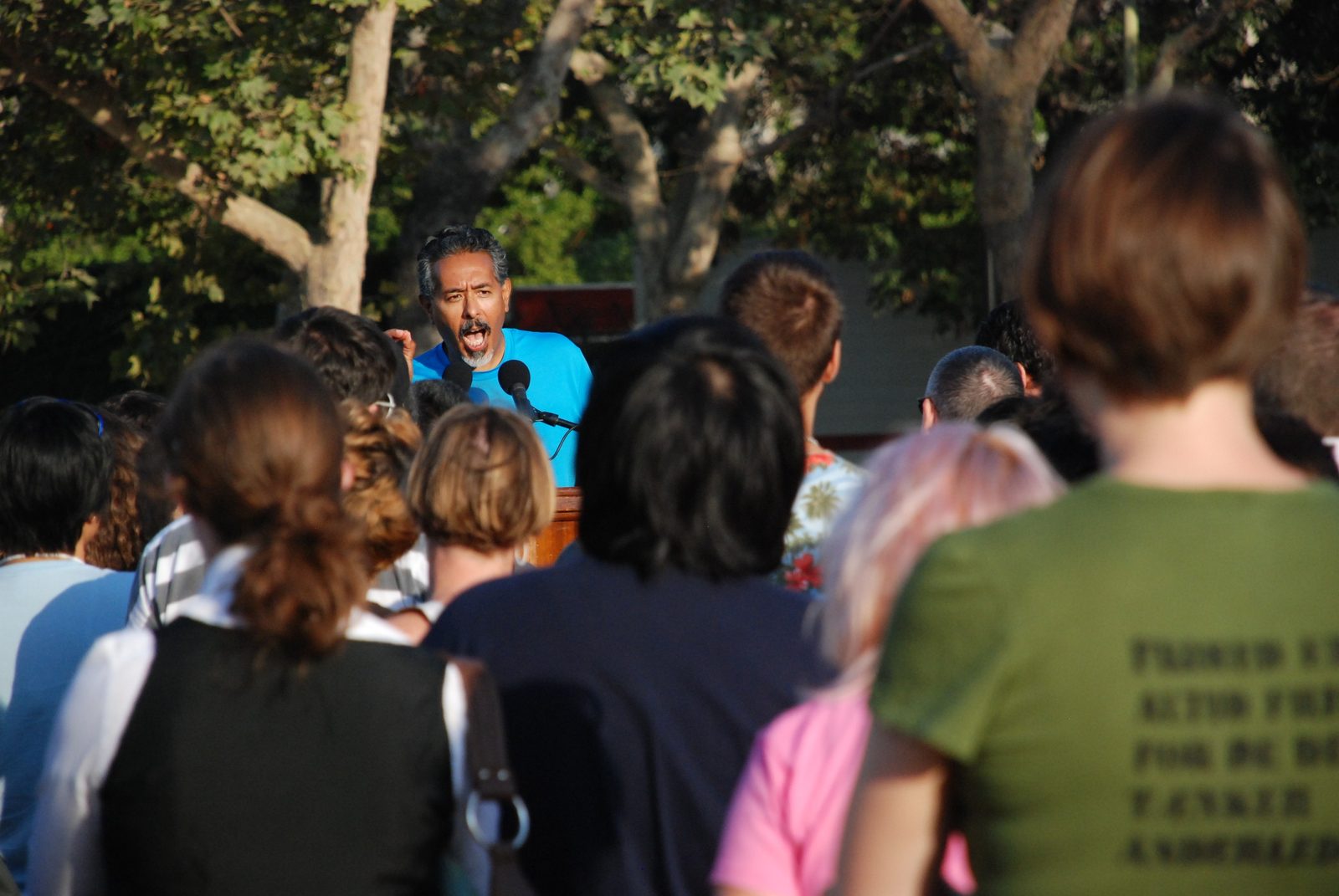
We Are Also Responsible, 2008
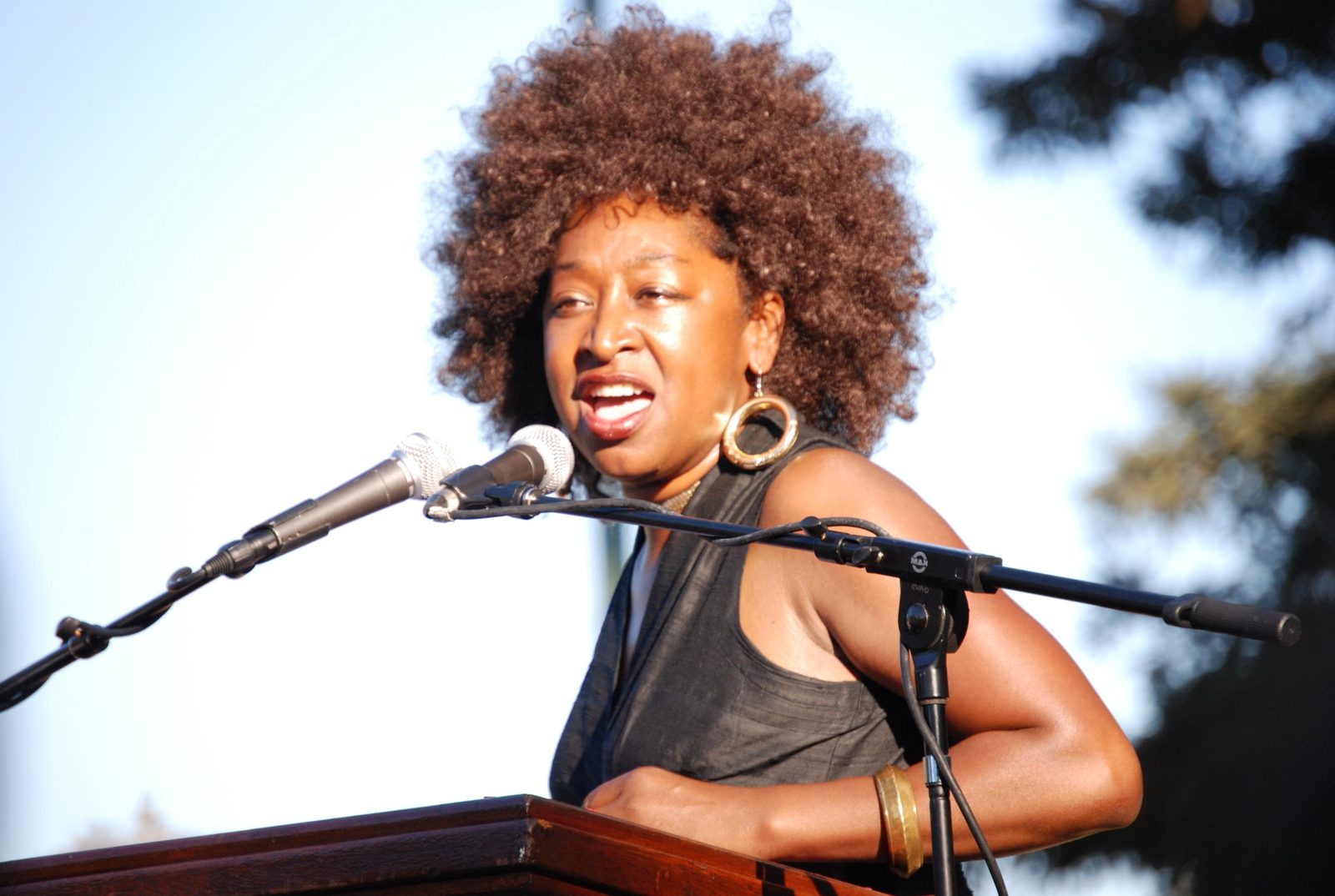
The Liberation of Our People, 2008
Bibliography
- Tribe, Mark. "Rhetorics of Resistance: Reflections on The Port Huron Project." In The Long 1968, edited by Jasmine Alinder, Aneesh Aneesh, Ruud van Dijk, and Daniel J. Sherman. Bloomington: Indiana University Press, 2012.
- Ulke, Christina, and Mark Tribe. "Politics by Other Means." Journal of Aesthetics and Protest, Issue 5, Summer 2007.
- Imus, Valerie. "[Review of Port Huron Project 5: The Liberation of Our People]." Stretcher, 2013.
- The Port Huron Project: Reenactments of New Left Protest Speeches. Texts by Mark Tribe, Nato Thompson, and Rebecca Schneider. 72 pages, 20 illustrations including 14 in color. (Charta, 2010.)
- Bryan-Wilson, Julia. "Sounding the Fury." Artforum International Magazine, January 2008.
- Knight, Christopher. "Mark Tribe's Port Huron Project via Los Angeles Contemporary Exhibitions." Los Angeles Times, July 25, 2008.
Press
- The New York Times — "Giving New Life to Protests of Yore," Randy Kennedy, July 28, 2007
- The Boston Globe — "Rallying 'Round the Past," Ken Johnson, July 22, 2007
- The Washington Post — "Hot Off the Presses: A Pot Full of Issues," Rachel Beckman, July 19, 2007
- The Chicago Tribune — "Times, Faces Change: Struggle Remains," Leora Falk, July 31, 2007
Texts
Cited, not reproduced. Stretcher
Journal of Aesthetics and Protest Issue 5, Summer 2007 Reformatted from JOAAP web site. Print edition is forthcoming.
Politics by Other Means: Christina Ulke in conversation with Mark Tribe The Port Huron Project is a series of reenactments of protest speeches from the 1960s and 70s. It is named after the Port Huron Statement, a visionary manifesto drafted by Tom Hayden for a meeting of the Students for a Democratic Society (SDS) in Port Huron, Michigan, in 1962. Each reenactment in the project is staged at the site of the original speech and is delivered by an actor to an audience comprising both invited guests and passers-by. The events have been documented using both old and new media and presented at various venues as well as distributed online (http://www.porthuronproject.net) and on DVD as open-source media. The first event in the series, Port Huron Project 1: Until the Last Gun Is Silent, is based on a speech given by Coretta Scott King at a peace march in New York City’s Central Park in 1968; the reenactment took place there on Saturday, 16 September 2006. Five additional events are planned for 2007 and 2008. Christina Ulke: What motivated you to reenact protest speeches from the New Left era? Mark Tribe: I came up with the idea as a response to the relative lack of political activity at Brown University, where I teach. As it happens, I went to college at Brown, and when I arrived there as a freshman in 1985, students had set up a shanty town in the center of campus to protest the university’s investments in South Africa. Twenty years later, and three years into a bloody and misguided war, the campus is quiet. No protests, no flyers. And my students never mention the war unless I bring it up. It’s not that they are in favor of the war. On the contrary, when asked, they all say they oppose it. But they don’t think they can do anything to stop the war. Many of them were active in the 2004 election, and were deeply disillusioned by the outcome. Others are just too busy with their own lives to give it much thought. I wanted to do something to help them (and me, for that matter) connect with the sense of possibility that characterized the New Left movements of the 60s and 70s. CU: I hear you. During my time at UCSD as adjunct faculty I always wondered about student life on a corporate campus. Most hang-out spaces on campus were commercial. Corporations donated computers and software and thus codetermined the curriculum of the new-media program I was teaching at. Many of my students lived off campus and spent little time on campus. It seemed to me that the university-industrial complex had a de-politicizing effect on the student body. Until recently, I wasn’t aware of the rebirth of the SDS in 2006. With the new SDS, there has been an impressive amount of direct action activism against the war in Iraq on campuses all over the US. I had an interesting conversation with Josh Kahn Russell of the new SDS* after a panel discussion we or
“Until the Last Gun Is Silent: Coretta Scott King1968/2006.” Central Park, New York City.
September 16, 2006. Photo by Winona Barton-Ballentine.
Rhetorics of Resistance: The Port Huron Project
by Mark Tribe
When I started teaching at Brown University in 2005, I was surprised by how
little antiwar protest there was on campus. Brown has a long history of student
activism: the eruptions of 1968 culminated in Brown’s adoption of a progressive new
curriculum drafted by students and, in 1985, students erected shanties and staged
hunger strikes to protest the university’s investments in companies doing business in
South Africa. It was clear that my students objected to American involvement in Iraq
and the Bush administration’s disregard for civil liberties, but they seemed to believe
that resistance was futile. It is not hard to imagine why. In 2000, they witnessed a
presidential election that many believed had been stolen. In 2003, many students
participated in the largest antiwar protests in history (the BBC estimated that six
to ten million people in sixty countries protested the imminent invasion of Iraq
on February 15 and 16 of that year), but the Bush and Blair administrations were
undeterred.
1 In 2004, many students worked on John Kerry’s presidential campaign,
only to see George W. Bush reelected by a narrow margin amid accusations of
voting fraud. Their formative political experiences had left them demotivated, if not
cynical.
The absence of contemporary youth-led protest movements in the United States
is often attributed to the absence of a military draft, to economic uncertainty, or
to the rise of the Internet as an alternative to face-to-face interaction. But it seems
to me that this absence is symptomatic of larger political, cultural, and intellectual
dynamics as well. Slavoj Žižek argues that “Things look bad for great Causes today,
in a ‘postmodern’ era when, although the ideological scene is fragmented into a
panoply of positions which struggle for hegemony, there is an underlying consensus:
the era of big explanations is over… in politics too, we should no longer aim at all-
explaining systems and global emancipatory projects.”
2
The collapse of the Soviet Union, the widespread abandonment of socialism,
the relentless advance of neoliberalism, and the rise of capitalism in communist
Asia have created a situation in which it has become difficult to sustain sweeping
radical agendas. Revolution seems impossible, at least for now. Within the ranks of
the far left, all but a few have abandoned what Alain Badiou calls the “communist
hypothesis,” or the theory that a “different collective organization is practicable,
one that will eliminate the inequality of wealth and even the division of labor... [that]
the existence of a coercive state, separate from civil society, will no longer appear
a necessity: [that] a long process of reorganization based on a free association of
producers will see it withering